Clothing
Why Buttons Fall Off: Sew-Through, Shank, and the Stitch That Holds
Sew-through and shank buttons fail differently: stitch counts, thread stems, chain-stitch shortcuts, and the ten-second tug test that predicts which survive.
By Claire Donovan · Published Oct 10, 2026 · Updated Oct 10, 2026
The short version
Sew-through and shank buttons fail differently: stitch counts, thread stems, chain-stitch shortcuts, and the ten-second tug test that predicts which survive.
Every label term in this guide is explained in what the symbols actually mean .
A button almost never falls off because the button broke. It falls off because of what is between the button and the fabric: a few millimeters of thread, sewn in a pattern chosen by a factory deciding how many seconds each shirt is worth. Two attachment types cover nearly every garment you own, and they fail in opposite ways. Read the construction once and you can predict which buttons in your closet are on borrowed time.
Sew-through: flat buttons, lever problems
The sew-through button — two or four holes, lying flat against the placket — is the dress-shirt standard, and its weakness is geometry. Because the button sits flush against the fabric, every pull on the closure turns it into a lever prying against the cloth, and the stress concentrates in the threads passing through the holes. A properly sewn sew-through button is not flush at all: the factory or sewer builds a thread stem, a small column of wrapped thread between button and fabric, usually two to four millimeters, so the button can stand over the overlapping fabric layer and flex instead of pry. Machines can build that stem, but it costs seconds per button, so cheap production skips it. Feel the underside of your next shirt: if the button sits hard against the placket with no give, the stem was skipped, and that is the button that goes first.
Shank: the button on a pedestal
A shank button has no holes on its face. Beneath the dome sits either a built-in plastic loop or, on better garments, a thread shank — the same wrapped column a stemmed sew-through gets, but as the only attachment. The construction buys clearance: the button stands above the fabric, the stress runs down the stem into multiple layers, and there is no lever pressing the button against the cloth. That is why coats, blazers, and waistbands use shank buttons — closures that fight thick, layered fabric need the pedestal. The failure mode is different too. A sew-through loses threads one by one until the last one goes; a shank button holds until the stem is cut or abraded, then drops whole. Check the stem, not the face — frayed wrapping on a thread shank is the warning a flat button never gives you.
The stitch count and the shortcut
Hand-sewing convention for a button is four to six passes of doubled thread, finished with a knot buried against the fabric. Industrial button attachers work in fractions of that: typical machine attachment is a set stitch count, and the shortcut that matters is the stitch type. A lock-stitch machine ties every stitch; a chain-stitch machine loops thread like a crochet chain, which is fast, and once one thread breaks the whole attachment can unravel — the reason some shirts shed buttons in runs rather than one at a time. You cannot see the stitch type on the finished button, but you can see its consequences: buttons that came loose in your wash with the thread still curled in a spiral were chain-stitched. The same inspection habit from reading zipper hardware on small leather goods applies — the attachment tells you more than the brand name on the trim.
The ten-second buy-and-wear check
In the store, hold a button between thumb and forefinger and try to rock it sideways. A properly attached button resists with a little spring — that is the stem doing its job — while one that clacks rigidly against the fabric has no stem, and one that rocks freely is already half off. At home, do the same check after the first wash, because the first launder is where skipped stems and short stitch counts give up. And when a button does go, keep it: the spare sewn into the inside hem is the factory admitting which buttons it does not trust.
Claire Donovan
Spent eight years in womenswear buying before moving to editorial research. Reads care labels for fun and returns nothing without a wear log. How we rate.
More in Clothing
FAQ
- Why do buttons on cheap shirts fall off faster?
- Two reasons stack. Budget production sews buttons with short stitch counts and skips the thread stem, so there is no slack for the button to sit above the fabric, and fast-fashion shirts are often sewn with chain-stitch button attachers that can unravel once a thread breaks. The button itself is rarely the failure — the attachment is.
- Is a shank button always better than a four-hole button?
- Not always, but it holds differently. A shank sits above the fabric on a thread or plastic stem, which spreads stress across the whole stem and layers a jacket front needs to close. A four-hole button lies flat and takes stress as a lever against the fabric. For thick, stressed closures — coats, blazers, jeans — the shank wins; for a flat-placket dress shirt, a well-stemmed four-hole is standard and fine.
- Can a fallen button be reattached so it stays?
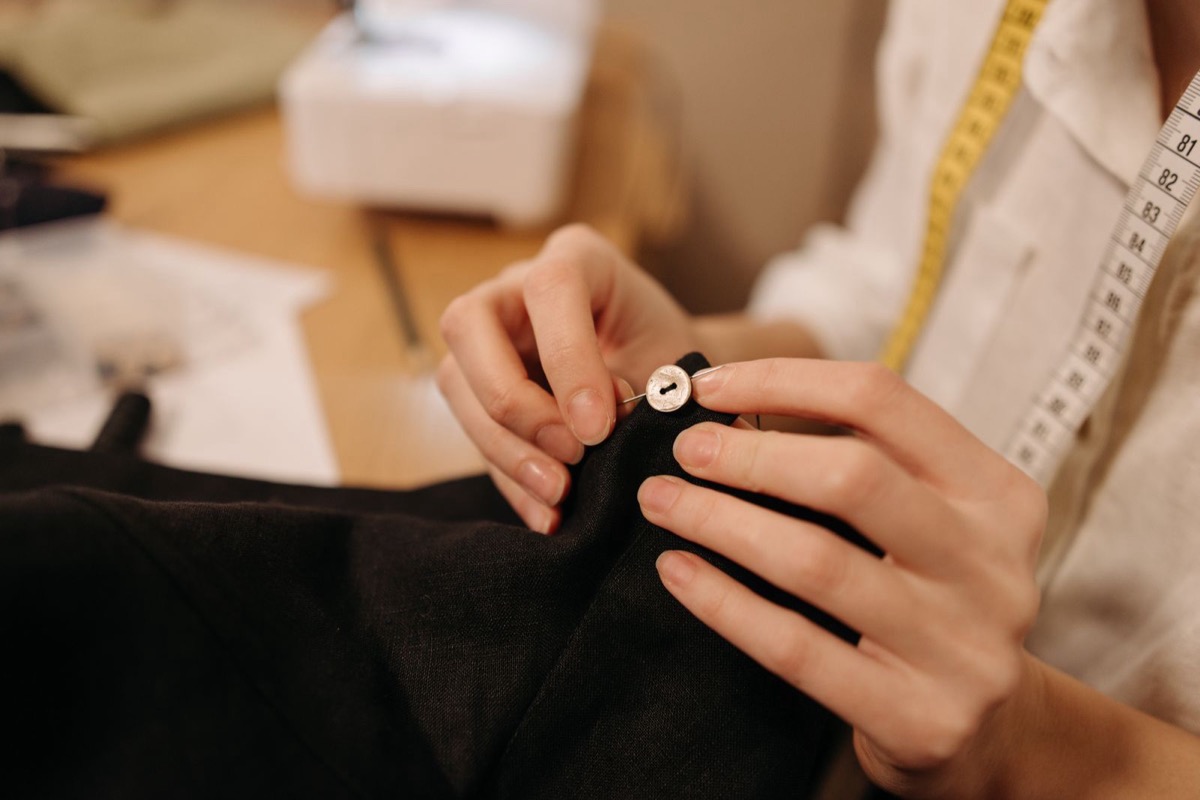
- Yes, and it will outlast the original. Hand-sew with doubled thread, make the sewer's knot, take four to six passes through the holes, and build a thread stem between button and fabric before wrapping it — then finish with a knot against the fabric, not on top. The wrapping step, which factories skip for time, is the part that keeps the button from snapping off at the first tug.