Capsule wardrobe content usually fails at the same point: it names thirty
beautiful things and lets you solve the budget yourself. This is the other
version. A working capsule is five slots, not thirty pieces — and each slot
has two or three construction details that decide whether the piece survives
its first year.
The five slots that carry a wardrobe
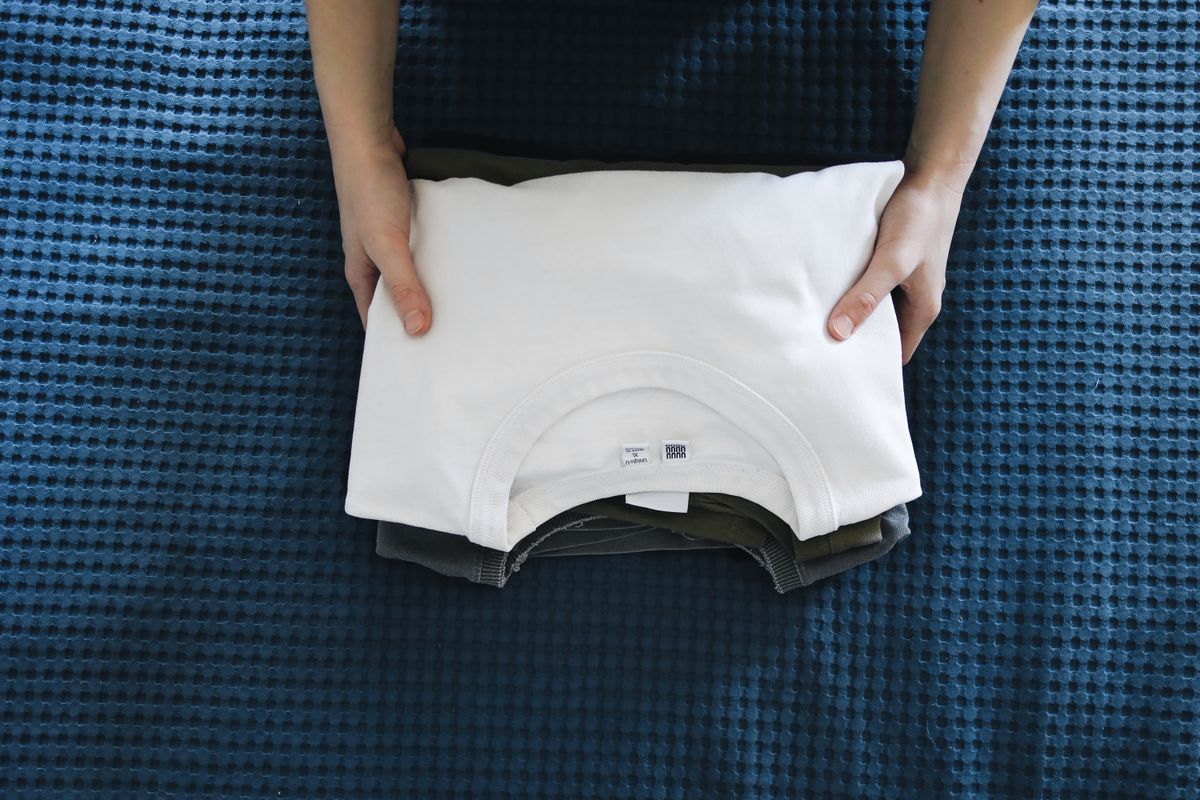
A white or off-white tee. The most replaced item in the list, so buy it
as a consumable: check the fabric weight (most everyday tees sit between
roughly 150 and 200 GSM; below about 150 the fabric goes sheer and loses
shape quickly), whether the hem is double-needle or coverstitched rather
than a single row that can pucker and twist in the wash, whether the collar
has ribbing with recovery — stretch it and see whether it snaps back — and
whether the maker publishes the cotton’s certification. Dark denim. The
decision that matters is raw versus pre-washed — raw sanforized denim shrugs
off months of wear before its first wash; pre-washed denim gives up its dark
finish gradually no matter how you treat it. Check whether the listing names
a fabric weight in ounces: mills that stand behind their denim usually do.
A mid-layer knit. Read the fiber percentage before the brand name: wool
blends under 30% merino or lambswool behave like acrylic with good
marketing, and pilling is where they announce it. Then look at construction —
shoulder seams that are linked rather than merely overlocked keep their shape
through more washes, and a published garment weight means the maker expects
comparison. A weather layer. Sealed seams matter more than waterproof
numbers for everyday rain; for occasional drizzle, a tightly woven untreated
cotton often reads better than a shiny membrane. Check that the piece is
washable at home, because a shell that demands dry cleaning stops being a
grab-and-go layer. Proper shoes. Covered in the white leather sneaker
spec check — the short
version is that sole attachment decides lifespan.
What “replaceable on purpose” means
Every slot above has a consumption profile. Tees die yearly and should be
cheap enough to rebuy without grief. Denim and knits should be bought once
and repaired. Weather layers sit in between. The audit question for each
piece you own is simple: when this wears out, do I know exactly what to buy
again? If the answer is no, you don’t own a staple — you own an impulse.
Why the boring pieces need the spec sheet more
The pieces with the least design interest carry the most wear. Nobody
re-reads the listing of a coat they love; the plain tee and the mid-layer
knit get worn weekly and washed dozens of times, so their failure modes —
collar slump, hem twist, pilling — are mechanical, not stylistic. That is
why the unglamorous slots are exactly where published specs earn their keep:
fabric weight, fiber percentage and seam construction are the only visible
differences between two plain garments. A ruffled collar can justify itself
on sight; a plain one has nothing to sell but its construction. The same
discipline behind reading a tote bag listing
applies — construction facts, not photography, predict the second year.
The replacement rhythm
A capsule fails at purchase as often as at design. Rebuild one slot at a
time: when a tee dies, replace it that week, to the same spec — same weight,
same collar construction — rather than waiting for a weekend overhaul. Buying
five replacements in one afternoon is how a capsule drifts back into impulse
shopping; the point of the audit is that every purchase already has a name, a
spec and a reorder decision attached. Note what each piece cost and how long
it lasted, and the second cycle gets faster and cheaper than the first, which
is the entire return on the bookkeeping.
Three starting picks
If you are rebuilding from a near-empty closet, start with the tee slot. The
three we would hand a friend: Everlane The Organic Cotton Box-Cut Tee as
the daily default, Uniqlo Supima Cotton Crew Neck T-Shirt as the cheap
rebuy, and Merz b. Schwanen 1950’s Loopwheeled T-Shirt for the
long-game wardrobe — details and links in the picks section.
The picks
Some links below are affiliate links — we may earn a commission at no extra cost to you.
01
Everlane The Organic Cotton Box-Cut Tee
The daily tee The tee most capsule guides end up recommending, and the easiest to rebuy in the same color a year later. Structured cut that reads deliberate under a jacket.
Pros
- Boxy cut holds its shape on hangers and under layers
- Organic cotton certification is published, not implied
Cons
- Structured cut reads too stiff for people who want a drapey tee
- Commonly reported to shrink slightly — follow the cold-wash line
Check current price
02
Uniqlo Supima Cotton Crew Neck T-Shirt
The cheap one The value baseline: widely stocked, consistently available, and cheap enough to own in three colors without thinking about it.
Pros
- The lowest price of the three by a wide margin
- Easy to rebuy — stock and sizing rarely change season to season
Cons
- Lighter fabric weight than the premium picks, so it ages faster
- Collar is the first part to show wear in owner feedback
Check current price
03
Merz b. Schwanen 1950's Loopwheeled T-Shirt
The long-game pick The heavyweight vintage-construction tee for people who already know their size. Priced like an investment piece because that is how it is meant to be worn.
Pros
- Loopwheeled construction and heavyweight fabric built for years of wear
- Repairs well — the kind of tee that gets visibly better with age
Cons
- Several times the price of the value pick
- Vintage cut and sizing quirks make online ordering genuinely tricky
Check current price