Clothing
Cashmere Grades and the Price Tag: How to Decode Both
Fiber length, diameter, ply, and origin explain why two 100% cashmere sweaters can cost thirty dollars or two thousand — and why the grade letter is the least reliable spec on the label.
By Claire Donovan · Published Sep 17, 2026 · Updated Sep 17, 2026
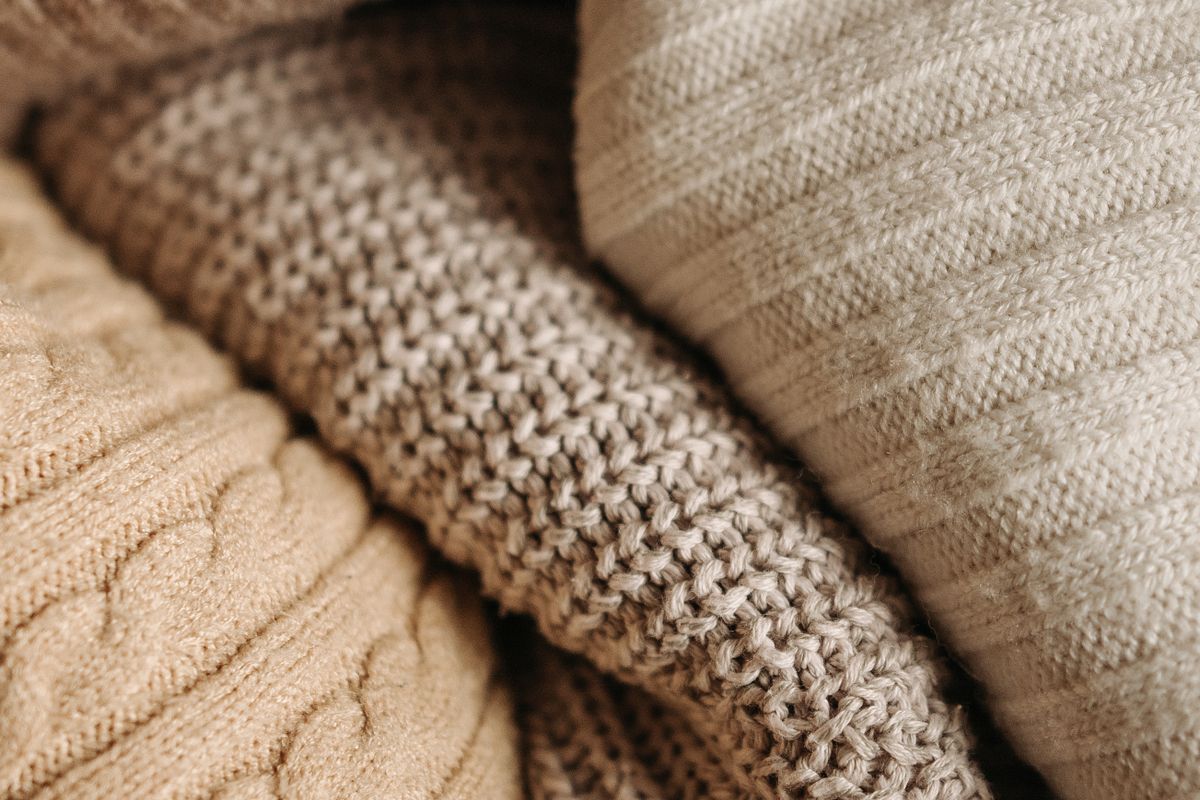
Two sweaters can both read “100% cashmere” and differ in price by a factor of fifty. The gap is not marketing alone — it reflects real differences in the fiber inside the yarn. But the spec that labels shout loudest, the grade letter, is the one nobody regulates. Sorting the reliable numbers from the decorative ones takes about five minutes.
The two numbers that decide everything
Fiber diameter and staple length do most of the work. Cashmere’s fineness runs roughly 14 to 16.5 microns for quality material, with the softest, most expensive lots at the narrow end of that range; above about 16 microns, hand feel takes a measurable step toward ordinary wool. Length matters just as much for longevity. Long-staple fiber runs about 30 to 36 millimeters, and longer fibers anchor along the yarn instead of working loose — which is why pilling tracks length more closely than softness. Short fiber, and especially the recovered shorts left over from spinning, pills within weeks of wear while still being legally cashmere. A label that publishes a micron figure and a fiber length is telling you something a grade letter cannot.
The grade letter nobody regulates
Here is the inconvenient fact behind “Grade A cashmere”: no international standard defines the letters. The A/B/C framework originated as an internal sorting convention among yarn mills, and brand usage of it is voluntary shorthand, not certification. What is regulated is fiber identity — under US textile labeling rules, a “100% cashmere” claim must hold up to fiber analysis, and brands have been penalized when it did not. But that analysis confirms the species of the fiber, not its length or fineness. A sweater knit from 22-millimeter shorts and one from 36-millimeter first combings both pass the same content test. Treat a grade letter as the brand describing its own supply chain, and weigh the published numbers far more heavily.
Ply: the spec that actually appears on labels
Ply is the count of strands twisted into a single yarn, and it is one of the few quality signals printed plainly. Single-ply yarn makes a lighter, drapier sweater that is also thinner and more prone to pilling and stretching at the elbows. Two-ply, the industry’s working standard for sweaters meant to last, twists two strands together — a denser knit that holds its shape and resists pilling better at only a modest weight penalty. Beyond two, extra plies add bulk and warmth rather than quality. If a listing omits ply entirely, the yarn is usually single-ply, which is part of how budget cashmere hits a low price with real fiber.
Where the price actually goes
Raw cashmere supply concentrates in a narrow geography — Inner Mongolia and Mongolia produce the majority of the world’s fiber, with the cold climate credited for finer undercoats. From there, price tracks the sorting: longer, whiter, finer fiber commands premiums at the dehairing stage, before any garment exists. Finished weight adds the rest, since a 280 gsm sweater contains roughly twice the fiber of a 160 gsm one, and spinning or finishing in Scotland or Italy carries its own labor cost. Fiber length, fineness, weight, origin — four real cost drivers, none of which require believing a letter on a hangtag.
The pattern — content claims enforced, quality claims left to vendors — shows up elsewhere too. See gold-filled versus gold-plated versus vermeil for the jewelry version, and the capsule wardrobe, audited for deciding how many of these sweaters one closet actually needs.
FAQ
- Is Grade A cashmere an official standard?
- No. The A, B, and C letters come from an internal sorting convention among yarn mills, and there is no international body or US regulation that defines or enforces them. When a brand markets 'Grade A cashmere,' it is citing its supplier's shorthand, not a certified classification.
- Why does one cashmere sweater pill in a month and another does not?
- Staple length is the usual answer. Long fibers anchor along the yarn, while short fibers — sometimes recovered from spinning waste — work loose and surface as pills within weeks of wear. Two-ply yarn also resists pilling better than single-ply because the twisted strands trap fiber ends between them.
- Is more expensive cashmere always warmer?
- Not necessarily. Warmth tracks fabric weight, not price. A 280 gsm two-ply sweater from mid-grade fiber will hold more heat than a 160 gsm sweater knit from the finest fiber on the market. Price follows fiber fineness and length; warmth follows how much of it was knit into the garment.
Claire Donovan
Spent eight years in womenswear buying before moving to editorial research. Reads care labels for fun and returns nothing without a wear log. How we research.