Clothing
Fused vs Half-Canvas vs Full-Canvas: Reading a Blazer Shoulder
How fused, half-canvas, and full-canvas blazer construction differ, what roped and soft shoulders tell you, and how to check a jacket before buying.
By Claire Donovan · Published Sep 8, 2026 · Updated Sep 8, 2026
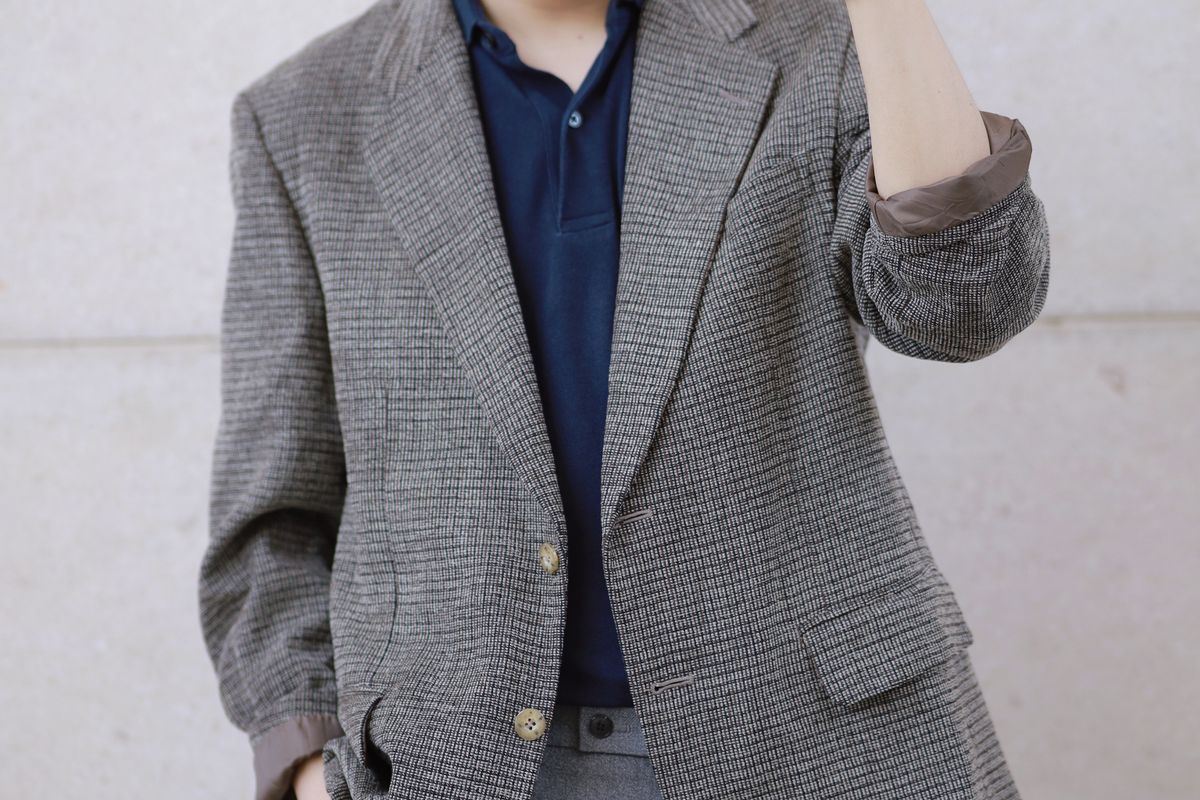
Blazer marketing barely mentions construction anymore, yet construction is the difference between a jacket that molds to you over five years and one that bubbles apart after two. Three building methods dominate: fused, half-canvas, and full-canvas. The price ladder tracks them so reliably that construction is the first thing worth checking on any blazer over about two hundred dollars.
The three constructions, and where the price breaks
Fused construction glues a fiber interlining to the shell fabric with adhesive. It is fast, cheap, and light, and it dominates the market below roughly the mid-hundreds. Half-canvas adds a floating canvas — traditionally wool and horsehair — stitched through the chest and lapel area only, with fusing below; it is the value sweet spot because it puts the molding, shape-holding structure where it matters most at a fraction of full-canvas labor. Full canvas floats a complete inner structure stitched to the shell throughout, letting the whole jacket drape and adapt; it is the tailoring standard and usually priced accordingly, from the high hundreds upward. These are market patterns, not laws — but a full-canvas claim at a fast-fashion price deserves skepticism, and a fused jacket at a tailoring price deserves a walk away.
Shoulders: the shape vocabulary
Two terms carry most of the meaning. A roped shoulder has a gathered, slightly puckered sleeve head that extends the shoulder line outward — Neapolitan tailoring’s signature, structured and formal. A soft shoulder, common in Italian and modern American cuts, is unpadded and unpinned, following the wearer’s natural line. Neither is better; they are dialects. What matters when shopping is consistency: a jacket claiming soft, casual tailoring should not arrive with dense shoulder pads, and a structured business jacket with a completely flat shoulder will read cheaper than its price. The shoulder is also where canvas structure shows most — a lapel that rolls in a smooth curve rather than folding on a flat crease usually has canvas under it.
The in-store check, outside and in
Outside: pinch the chest fabric between thumb and forefinger. Fused feels like two stiff sheets glued together; canvas feels like three layers with a pliable one floating between. Then cup the lapel and roll it — canvas lapels curve, fused lapels crease. Inside: look through the armhole or hem opening for the edge of a floating canvas layer, and inspect the lining stitching density while you are in there. Thirty seconds covers it, the same label-and-seams discipline we use in the capsule wardrobe audit and reading a tote bag listing.
What delamination actually looks like
When fused interlining fails, the adhesive bond breaks and the shell separates from the backing in patches: visible bubbles at the chest, lapels that ripple instead of lying flat, a crinkling sound when pressed. Heat from dry cleaning presses and years of body warmth accelerate it, and it is not repairable — the fusing cannot be re-bonded cleanly. This is the entire argument for canvas at higher price points: stitched structure has no adhesive to fail, so its worst case is a worn jacket, not a blistered one.
FAQ
- Is a fused blazer always a bad purchase?
- No. Fused construction keeps cost and weight down and is perfectly serviceable at lower prices, as long as the fusing is well bonded. The problems appear over years: heat and dry cleaning can break the adhesive bond, and that is when bubbling and delamination start. Buy fused knowing it is a shorter-lifespan garment.
- How can I tell if a blazer is fused without asking?
- Pinch the layers of the chest area between your fingers from the outside — a fused jacket feels like two flat sheets of paper, while a canvas jacket feels like a third, pliable layer floating between fabric and lining. Also check that the lapel rolls gradually rather than folding on a hard crease, and look inside the sleeve or hem opening for the canvas edge if you can.
- Does full canvas really last that much longer?
- Yes, mechanically: the canvas is stitched to the shell rather than glued, so there is no adhesive to fail, and the jacket molds to the wearer over years of wear. That is why tailoring houses treat full canvas as the default for garments meant to be altered and kept for decades. The trade-off is price, weight, and a longer break-in period.
Claire Donovan
Spent eight years in womenswear buying before moving to editorial research. Reads care labels for fun and returns nothing without a wear log. How we research.