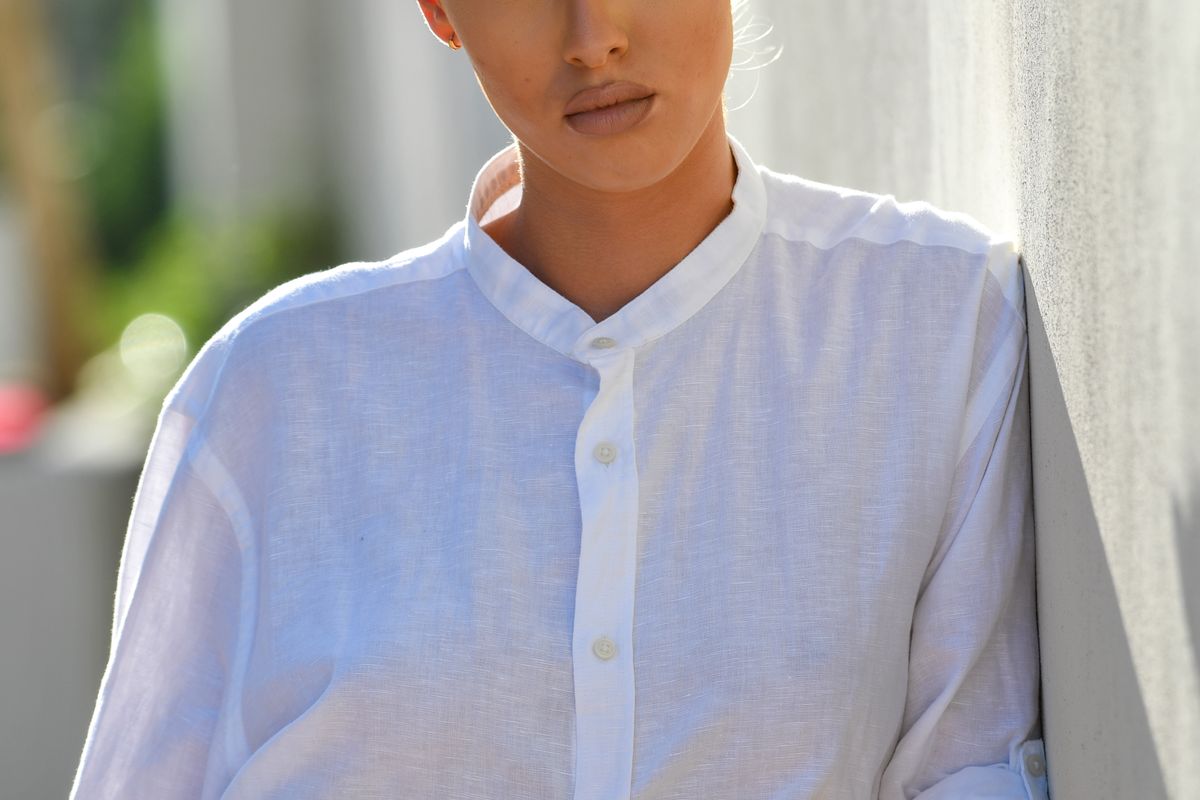
Linen shirts are sold on texture photographs and the word “effortless,” which
tells you nothing about whether the shirt survives its third summer. The
durable version is decided by five readable things: fabric weight, fiber
origin, seam stitching, blend ratio, and how you wash it. All five can be
checked before purchase except the last, and the care label predicts it.
Weight and drape: the GSM read
Linen fabric weight is published as grams per square meter, and shirt-weight
linen typically sits somewhere between roughly 120 and 190 GSM. At the lower
end the fabric is airy and semi-sheer, drapes close to the body, and wrinkles
into soft ripples. At the upper end it stands away from the body, holds a
shape through humid afternoons, and reads more tailored. Neither is better;
they are different shirts. The failure mode to avoid is a mid-market
compromise: a fabric too light to hold structure and too heavy to breathe
well, which is usually a sign the mill was chosen on price. If the listing
does not state GSM, the product photographs on a hanger, backlit, will tell
you almost as much.
What European Flax certification actually certifies
The European Flax mark, which appears on an increasing share of mid-price
linen, is a fiber-origin certification: it guarantees the flax was grown in
Western Europe and is traceable through the chain, as Uniqlo’s own listing
puts it for its premium linen shirts. It is not a quality grade — it says
nothing about weave density, finishing, or GSM. It is still worth having.
Flax from the Normandy-to-Netherlands growing band is the reference raw
material for the industry, and a traceable origin claim is harder to fake
than a soft-focus word like “premium.” Read the certification as where, not
how well.
Stitching: double needle and clean edges
Flip the shirt. Hems and side seams sewn with a double-needle — two parallel
stitch rows — resist pulling apart at stress points and lie flatter through
repeated washing; it is slower and more thread-hungry than a single row,
which is why it marks the better tier. Then look at the edges around the
collar stand and cuff plackets: clean finishing, whether bound or neatly
turned, keeps fraying out. Loose serged seams inside an otherwise crisp shirt
are where a value fabric revealed its budget, and they go first at the
armhole.
Blends: what cotton and viscose actually do
Cotton-linen blends trade a share of linen’s cool, dry touch for softness
and less dramatic wrinkling — a reasonable trade for a shirt worn to work.
Viscose-linen blends drape more fluidly and add a slight sheen, but viscose
is weaker when wet, so those shirts age faster with machine washing. The
ratio rule from wool applies here too: the first-named fiber is the majority,
and behavior follows the majority. A “linen shirt” that opens its label with
viscose is a different garment than the photograph suggests.
Shrinkage expectations and care
Linen shrinks most on its first encounters with heat. Cold washing and line
drying keep it minimal; a hot tumble dryer is the single fastest way to take
a shirt down a size, which is why care pages across brands — Uniqlo’s among
them — specify cold machine wash and explicitly rule out the dryer. Expect
slight relaxation back into shape while wearing. If a listing promises a
linen shirt that “never wrinkles,” read that as a blend disclosure problem,
not a textile breakthrough. The same label-first discipline we apply in
the capsule wardrobe audit and
reading a tote bag listing covers
linen without modification.
Three shirts, three approaches
The Quince 100% European Linen Long Sleeve Shirt is the value baseline:
European flax with OEKO-TEX certification at USD 42. The
J.Crew Garçon Classic Shirt in Baird McNutt Irish Linen is the mill-story
pick — Irish linen from a mill operating since 1912 — at USD 118. The
Uniqlo Women’s Premium Linen Shirt is 100 percent European-grown flax at
USD 49.90. Specs, links, and the side-by-side comparison are in the table
below.
The picks
Some links below are affiliate links — we may earn a commission at no extra cost to you.
01
Quince 100% European Linen Long Sleeve Shirt
The value baseline Factory-direct pricing on 100 percent European flax with OEKO-TEX Standard 100 certification, listed right on the product page. At this price it is the easiest way to test how much linen shirt you actually wear per summer.
USD 42 · 4.8/5
(15260 ratings) — quince.com
Pros
- 100% European flax with published OEKO-TEX certification
- Enormous review base (15,000-plus) averaging 4.8, repeatedly praising value
Cons
- Relaxed fit runs generous — size intent matters
- Factory-direct model means seasonal color churn; favorites may not restock
Check current price
02
J.Crew Garçon Classic Shirt in Baird McNutt Irish Linen
The mill-story pick Linen from Baird McNutt, an Irish mill J.Crew says has been weaving since 1912, in a medium classic cut that has quietly replaced the brand's older 'perfect shirt.' The fabric weight sits in the substantial middle of the range.
USD 118
Pros
- Named heritage mill with a documented weaving history
- Classic cut with regular promotions bringing it well below list
Cons
- List price is more than double the value pick between sales
- Heavier Irish linen runs warm on still, humid days
Check current price
03
Uniqlo Women's Premium Linen Shirt
The easy rebuy 100 percent European-grown flax at a high-street price, with European Flax traceability stated on Uniqlo's own listings and a relaxed cut designed to layer. Widely stocked every season, which makes replacement trivial.
USD 49.90
Pros
- 100% linen with certified European Flax traceability at a fast-fashion price
- Consistent seasonal restocks in many colorways
Cons
- Relaxed cut reads casual; less useful tucked into tailoring
- Lighter hand feel than the Irish-linen pick, so it wears faster
Check current price