Clothing
Raw vs Washed Denim: What the First Year Actually Shows
Shrinkage rates, the first-wash debate, and how indigo fades form — what to expect from raw denim across twelve months versus a pre-washed pair.
By Claire Donovan · Published Sep 22, 2026 · Updated Sep 22, 2026
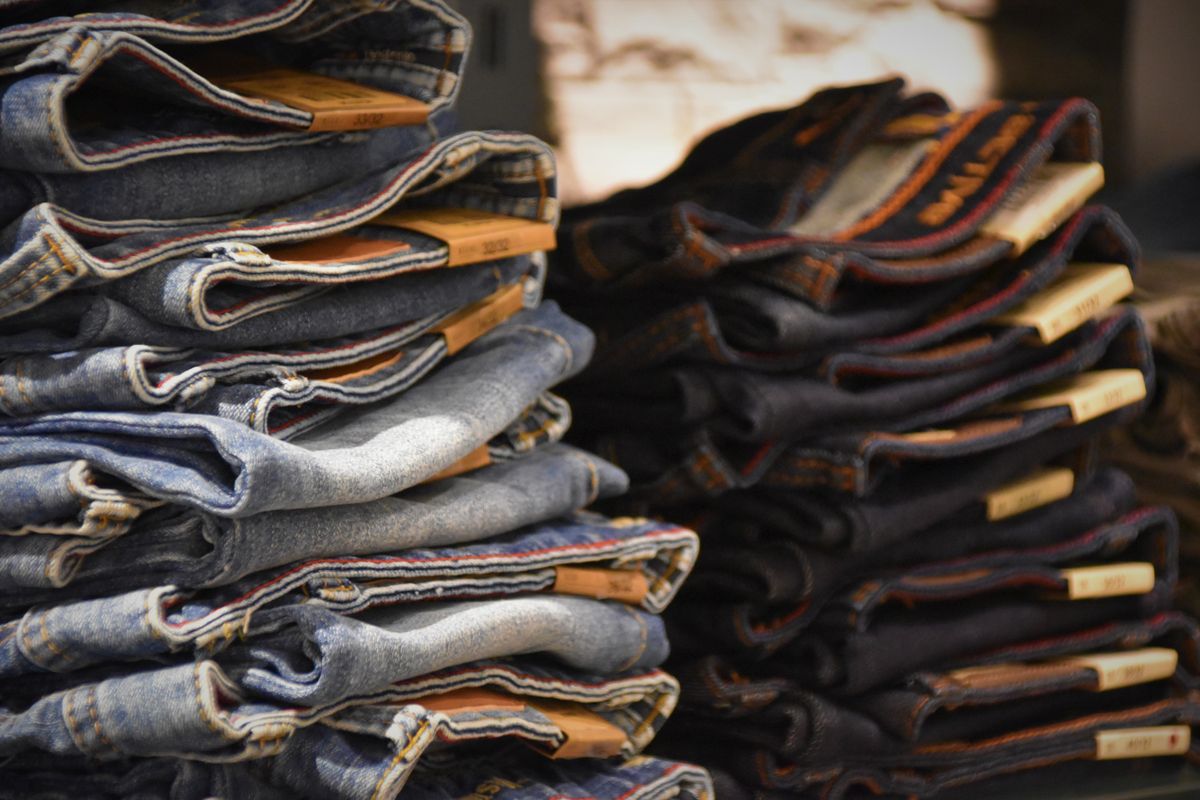
Raw versus washed is not a quality comparison — it is a question of how much of the breaking-in work you want to do yourself. Raw denim leaves the factory unwashed after dyeing, indigo intact and fabric stiff. Washed denim has been through industrial washing, softening, and often distressing before it reaches the rack. The first year of ownership looks completely different for each, and most of the difference traces back to three things: shrinkage, the first wash, and how indigo behaves on the yarn.
Sanforized or not: the shrinkage math
Most raw denim sold today is sanforized, meaning the fabric has been mechanically pre-shrunk during finishing. A sanforized raw pair typically shrinks only 1 to 3 percent on its first wash — close enough to nothing that buying true to size is standard advice. Unsanforized, sometimes called loomstate, denim skips that step. Enthusiast guides consistently put its first-wash shrinkage at 5 to 10 percent in length, enough to cost an inch or more of inseam, which is why loomstate buyers traditionally size up and soak before judging the fit. Check which kind you are holding before arguing with the size chart; the listing usually states it, and the distinction matters more than the brand name on the patch.
The first wash debate
Conventional advice in the raw denim community holds that the first wash should wait around six months, on the theory that early washing evens out the creases before high-contrast fades set in. It is a convention, not a rule — and the counterargument is practical rather than romantic: wearing denim for months without washing lets dirt and body oils grind into the cotton, and that grit accelerates crotch blowouts. Both camps agree on the mechanics when the wash does happen: cold water, inside out, gentle detergent, hang dry. Heat is what costs you indigo and shape, not the machine itself.
How indigo fades form
Indigo does not penetrate cotton fully. It sits on the surface of the yarn, layer over layer, with a white core underneath — which is why raw denim fades by abrasion rather than by washing out. Where the fabric rubs, the dyed surface wears away and the white core shows through. The two famous patterns both come from repeated creasing: whiskers are the fan of thin fade lines that form across the front thighs and hips where the fabric folds every time you sit, and honeycombs are the web of fades behind the knees, pressed in as the denim bunches each time the leg bends. A year of daily wear produces them on raw denim; a washed pair fades evenly because the factory already did the abrading.
Raw denim rewards a year of patience with contrast a pre-faded pair cannot match, but the fabric commitment is real. For a broader look at buying for longevity over novelty, see the capsule wardrobe, audited, and for a comparable spec-first breakdown of another everyday staple, the white leather sneakers guide applies the same logic to footwear.
FAQ
- Do raw denim jeans always shrink?
- Not much if they are sanforized — mechanically pre-shrunk fabric typically contracts only 1 to 3 percent on its first wash. Unsanforized, or loomstate, denim skips that treatment and can lose 5 to 10 percent of its length, which is why sizing advice differs sharply between the two.
- Can I machine wash raw denim?
- Yes. The idea that raw denim must never see a washing machine is enthusiast folklore, not a care requirement. Turn the jeans inside out, use cold water and a gentle cycle, and hang dry — that protects the fade contrast far more effectively than avoiding the machine entirely.
- Why does raw denim fade but washed denim does not?
- Indigo dyes the outside of the yarn, leaving the cotton core white. Raw denim keeps that dyed surface untouched, so friction can scrape it away in high-contrast patches. Washed denim has already been abraded and softened in industrial washes, so its fading is even and low-contrast from day one.
Claire Donovan
Spent eight years in womenswear buying before moving to editorial research. Reads care labels for fun and returns nothing without a wear log. How we research.