Eyewear
Glasses Hinge Types Explained: Barrel, Flex and Screwless
Barrel, flex and screwless glasses hinges differ in how they absorb stress and how they fail. What each type is, and which one fits your habits.
By Claire Donovan · Published Sep 29, 2026 · Updated Sep 29, 2026
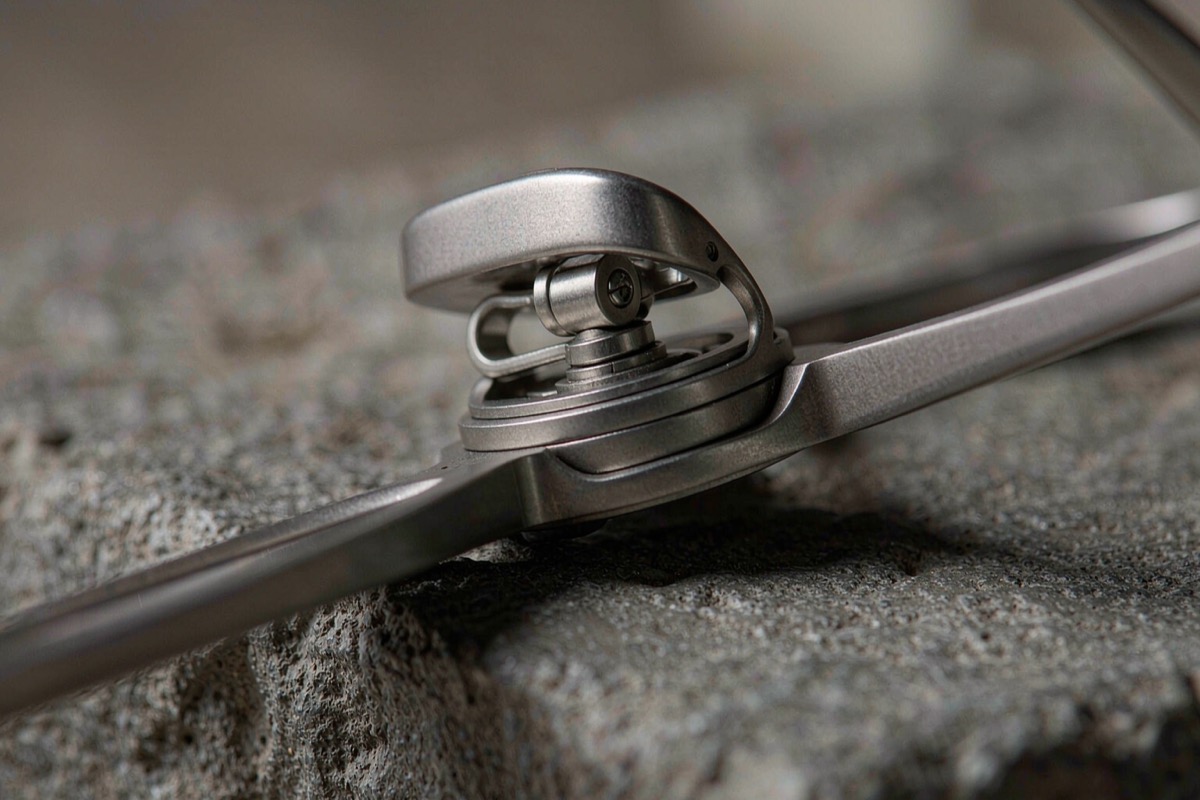
Hinges take more abuse than any other part of a pair of glasses. Lenses get cleaned; hinges get sat on, dropped and opened one-handed hundreds of times a week. Yet product pages rarely say which hinge a frame uses. The three common types absorb stress, age and fail differently, and knowing the difference predicts the repair bill better than the price tag does.
Barrel hinges: the baseline
A barrel hinge is the oldest and simplest construction in eyewear: a small metal pin running through interlocking rings, one set on the frame front, one on the temple arm. Some versions fold out of the acetate or metal itself; others are separate components riveted in place. Almost nothing that goes wrong defeats an optician: a loose barrel tightens with a precision screwdriver, a worn pin swaps out in minutes, and repair shops stock the parts. The trade-off is stiffness: a barrel hinge holds the temple at a fixed angle. Open the temples past their natural range and something has to give — the hinge, the temple, or the frame front.
Flex hinges: the spring that forgives
A flex hinge, also called a spring hinge, adds a small coil behind the barrel. The spring lets the temple arm bow outward beyond its resting position and pull itself back, which absorbs the everyday accidents: grabbing the glasses by one temple, sitting on them briefly, yanking them off a shirt pocket. Anyone rough on eyewear gets real value from that, which is why the design dominates children’s frames and safety eyewear. The cost appears at repair time. When the spring corrodes or fatigues, the standard fix is replacing the entire temple arm — routine on a current model, maybe impossible on a discontinued one — so it is worth checking whether the maker still supplies parts before paying extra for flex.
Screwless hinges: fewer parts, less adjustment
Screwless hinges replace the pin-and-screw assembly with interlocking pieces that snap or press together, usually in machined titanium or injected nylon. With no screw to work loose, they hold alignment and shrug off vibration, and many let a snapped temple clip back in without tools. The limits are structural. Most screwless designs are proprietary, so a repair beyond the snap-back fix means the original maker or a new frame, and the rigid construction leaves an optician little room to bend the temples into a better fit. Wearers who need customized temple curvature may find a screwless frame a dead end.
What a broken hinge actually costs
A loose temple is not failure — screws back out under normal wear, and a periodic tighten is maintenance, not a defect. Actual breakage divides cleanly. A broken barrel hinge is a bench job: re-tighten, re-pin or swap, often same-day, for a modest fee. A broken spring usually means a new temple arm, contingent on spare availability. A broken screwless hinge depends entirely on the parts pipeline; many pop back together, others become single-use frames. The outcome, in every case, was decided at manufacture, not at breakage.
Matching the hinge to the habits
Anyone who handles glasses carelessly benefits most from flex hinges; careful wearers do fine with plain barrels, which repair anywhere. Screwless suits people who want zero maintenance and accept a fixed fit. Whichever you choose, the hinge decision interacts with material — our acetate and metal breakdown covers that side — and lens claims are a separate check, whether you are verifying UV400 on a sunglasses label or reading what labs found in blue-light glasses.
Claire Donovan
Spent eight years in womenswear buying before moving to editorial research. Reads care labels for fun and returns nothing without a wear log. How we rate.
More in Eyewear
FAQ
- Are screwless hinges more durable than screw hinges?
- They hold alignment better day to day, because there is no screw to work loose. But durability and repairability are different things: most screwless designs are proprietary, so once a break goes beyond the snap-back fix, the options narrow to the original maker or a new frame. A barrel hinge loosens more often and repairs anywhere.
- Why do my glasses keep getting loose at the hinges?
- Screws back out under ordinary vibration and repeated folding, especially the one-handed, push-them-open habit. It is wear, not a defect — a periodic tighten with a precision screwdriver is normal maintenance. If a temple keeps drifting out of alignment even when tight, the hinge or temple may be bent, which a repair shop can usually re-seat.
- Can a broken spring hinge be repaired?
- Usually, but the standard fix is replacing the entire temple arm rather than servicing the spring itself. On a current model that is routine; on a discontinued frame the maker may no longer supply spares. That is the trade-off against the barrel hinge, whose pin swaps out in minutes at nearly any repair shop.