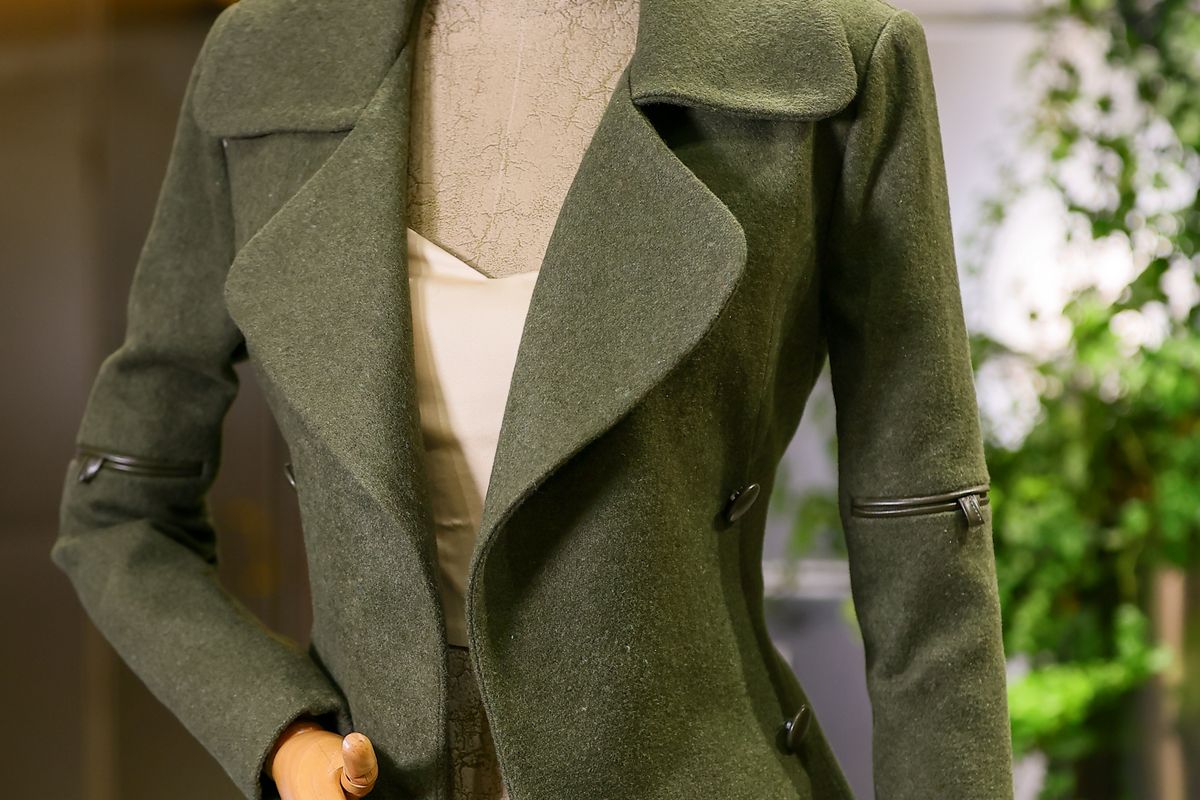
A wool coat is the most expensive single item in most winter wardrobes, and
also the one where marketing language hides the most. The fabric percentage
gets the label’s largest type; the construction that decides whether the coat
survives ten winters gets none. Four checks cover nearly all of it, and every
one can be done in the store with your hands.
Lining first, because it is the fastest tell
A full lining backs the body and sleeves with a separate fabric layer. It
lets a heavy coat slide over knitwear and protects the seam allowances, which
is why most structured overcoats have one. A half lining covers roughly the
upper back and shoulders only, cutting weight and cost; it is common on
lighter topcoats. Unlined and double-faced coats join two face fabrics so
neither side needs covering — legitimate construction, but check that the
inner seams are bound rather than left raw.
Lining material matters as much as coverage. Cupro and viscose breathe and
drape like cotton. Polyester is cheaper and more abrasion-resistant, but it
holds heat against the body, and it is where most lining-splitting complaints
start. A full polyester lining is not a defect at lower prices; it is one of
the trade-offs you are accepting.
Read the wool percentage like a buyer
The Textile Act obliges sellers to state fiber content, so the label is a
legal claim, not a suggestion. Wool at 90 percent or higher behaves like
wool: it recovers from wrinkles, regulates temperature, and takes a pressing.
Blends are not automatically worse — nylon improves abrasion resistance and
lowers cost — but the behavior shifts with the ratio. One current budget
listing at a major retailer reads 42 percent nylon, 37 percent wool,
21 percent polyester; that coat will wear more like a synthetic with wool’s
name attached. Below roughly two-thirds wool, expect earlier pilling and less
recovery between wears. Fiber order on the label follows share, so the first
word is the majority fiber.
Stitch density and seam finishing
Turn the coat inside out. Dense, even stitching — a working benchmark is ten
or more stitches per inch on lapels and main seams — usually signals slower
machines and better fabric handling. Sparse stitching that drifts off-line is
the classic speed-sewn marker. Then check the raw edges: bound or cleanly
finished seam allowances hold up over years, while loosely serged edges that
fuzz after one season are common in the value tier and tend to fail first at
the armhole, where stress concentrates.
Hems, cuffs, and the four-minute check
A hand-felled or blind-stitched hem lies flat and can be let down for
alteration; a hem that is glued or flattened under a straight row of
topstitching cannot. Cuffs should mirror the hem method. Run a thumbnail
along the hem from the inside — anything that crackles or feels rigid may be
fused, and fusing is what bubbles and delaminates after a few cleanings.
Budget four minutes: lining, label, seams, hem. It is the same audit logic we
used in the capsule wardrobe, audited
and in how to read a tote bag listing.
Three coats at three prices
For a 100 percent wool example, the
L.L.Bean Women’s Classic Lambswool Polo Coat, Three-Quarter Length
pairs an Italian lambswool shell with a full polyester lining at USD 290. In
the middle, the J.Crew Tailored Peacoat in Italian Wool-Blend Melton is
the classic double-breasted melton cut at USD 398. For a modern double-faced
option, the COS Belted Double-Faced Wool Coat lists 60 percent RWS wool
with a viscose lining at USD 350. Details, links, and the side-by-side
comparison are in the table below.
The picks
Some links below are affiliate links — we may earn a commission at no extra cost to you.
01
L.L.Bean Women's Classic Lambswool Polo Coat, Three-Quarter Length
The 100% wool pick A three-quarter-length single-breasted coat in 100 percent Italian lambswool with Thinsulate insulation, per the maker's product page. The construction checklist on this page reads clean against it: bound interior finishing and single-needle topstitching are listed by the brand.
USD 290 · 4.3/5
(1201 ratings) — llbean.com
Pros
- 100% premium Italian lambswool shell, stated on the product page
- Backed by a very large, sustained review base rating it 4.3 out of 5
Cons
- Body lining is 100% polyester rather than cupro or viscose
- Classic American cut reads conservative next to modern oversized shapes
Check current price
02
J.Crew Tailored Peacoat in Italian Wool-Blend Melton
The classic cut The traditional double-breasted peacoat shape in Italian wool-blend melton, and the reference point for the silhouette most people mean when they say 'a wool coat.' J.Crew runs promotions often, so the list price is a ceiling more than a price.
USD 398
Pros
- Timeless double-breasted melton construction with a long restock history
- Regularly discounted well below list price during seasonal promotions
Cons
- Blend ratio is not prominent on the product page — read the label before buying
- Melton face naps and fuzzes with years of abrasion, a known trait of the cloth
Check current price
03
COS Belted Double-Faced Wool Coat
The modern one COS lists this belted wrap coat at 60 percent RWS-certified wool with 40 percent TENCEL Lyocell and a viscose lining — a transparent composition read for a mid-price coat. Double-faced fabric gives the hand feel usually associated with pricier coats.
USD 350
Pros
- Composition and RWS certification are published clearly on the product page
- Viscose lining breathes better against knitwear than polyester
Cons
- 60 percent wool means synthetic-blend behavior, not full-wool recovery
- Relaxed wrap cut will not suit anyone after a tailored fit
Check current price